Generated by AI
India’s Digital Payments Shift: From Cards to UPI
5 mins
●
ByMintoak
●
15 May 2026

Copy Link


The Rise of UPI
UPI has scaled at an unprecedented pace. Monthly volumes crossed the 2,000 crore mark for the first time in August 2025, peaking at 2,264 crore transactions in March 2026 - the highest ever recorded, per DD News citing NPCI data. P2M (person-to-merchant) transactions now account for the bulk of this volume, reaching 67 billion transactions in H1 2025 alone, growing 37% year-on-year, according to NPCI.
This growth has been driven by widespread QR deployment, rapid smartphone penetration, affordable data, and strong policy support through initiatives like demonetisation and GST. Zero MDR and ecosystem-led incentives have further accelerated adoption, making UPI the most accessible and widely accepted payment method in the country.
What's Happening to Cards
While cards continue to play a role, their trajectory has diverged sharply. Debit cards have seen a steady decline in merchant usage. Transaction volumes have fallen nearly 65% between 2019 and 2024, according to the RBI Payment Systems Report. The reason is straightforward, UPI absorbed exactly the everyday use cases debit cards used to own.
Credit cards remain resilient. Monthly transactions sit around 490 million, concentrated in higher-value spends across travel, dining, and retail supported by rewards, EMI options, and access to credit. In value terms, credit card spend has nearly tripled over the last five years, per RBI data.
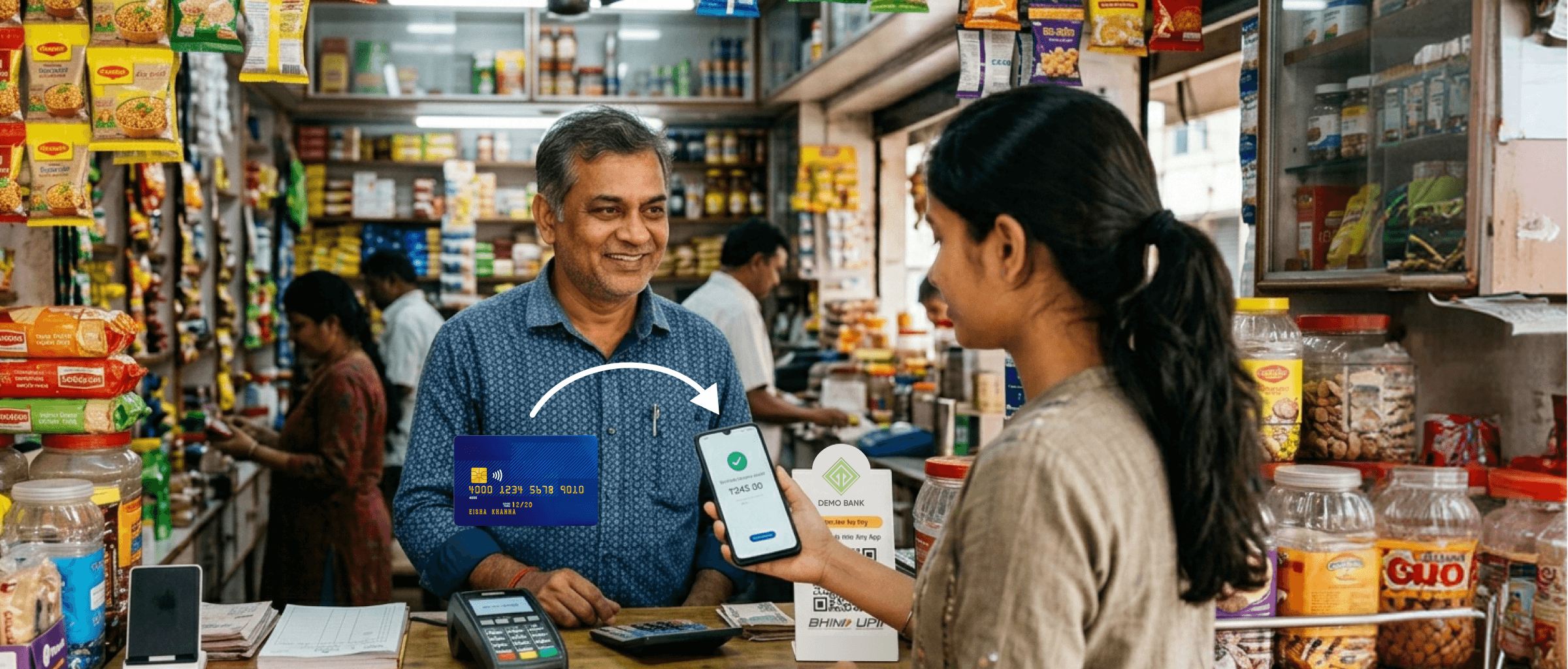
In terms of scale, UPI P2M transactions are now roughly 15x the combined volume of Cards (POS) merchant payments, a gap that continues to widen.
The Structural Shift
The move toward UPI reflects a deeper behavioural shift. Payments have transitioned from card-led experiences to mobile-first journeys. Acceptance infrastructure has evolved from POS terminals to QR codes. Consumers now prefer instant, low-friction payment methods that integrate seamlessly into daily life.
At the same time, innovations like credit-on-UPI and increasing transaction limits are beginning to extend UPI's relevance into use cases traditionally dominated by cards, bringing credit access to millions of first-time borrowers through the same QR code they already use every day, per NPCI.
What Does This Mean for Merchants
For merchants, this shift is both an opportunity and a strategic lever for growth. UPI acceptance significantly lowers the cost and complexity of going digital, enabling even the smallest businesses to accept payments instantly. Faster checkouts and higher success rates improve customer experience and throughput.
Digital transactions also create valuable data trails, helping merchants better understand customer behaviour, drive repeat purchases, and unlock access to financial services like credit and working capital. At the same time, Cards (POS) continue to play a role in higher-value transactions, giving merchants a balanced acceptance mix.
What Does This Mean for Consumers
For consumers, UPI has made payments simpler, faster, and more accessible. There is no dependency on physical cards or cash, and transactions can be completed in seconds using a smartphone.
UPI also offers greater flexibility, with features like collect requests, autopay, and emerging credit-on-UPI options. As acceptance becomes ubiquitous, consumers benefit from a seamless payment experience across use cases from everyday purchases to higher-value transactions where Cards (POS) may still be preferred.


Closing Thought
India's transition from cash to Cards (POS) to UPI has been rapid. As UPI continues to expand into credit and higher-value transactions, the payments ecosystem is set to become more integrated, inclusive, and real-time. PwC projects 1 billion daily UPI transactions by FY2027, a number that, given the trajectory, no longer feels ambitious.
Share on your socials
Copy Link
Checkout other blogs