Generated by AI
Why Indian Banks Are Losing the SME Merchant Relationship
8 mins
●
ByMintoak
●
18 Jun 2026

Copy Link


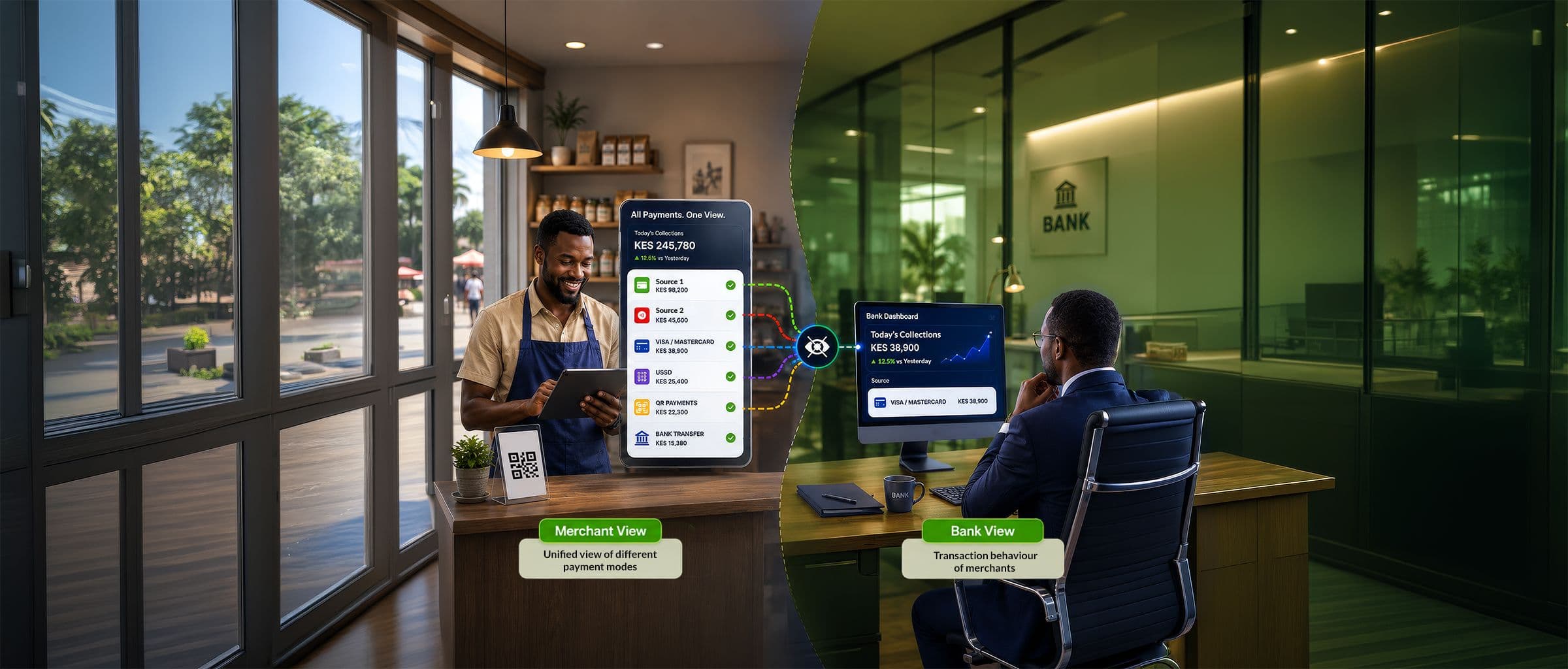
Walk into any mid-sized store today, and digital payments are already a part of everyday business. QR codes are everywhere, payment alerts arrive instantly, and merchants can track every transaction in real time. Yet despite this daily engagement, the relationship often remains transactional. Merchants open their banking app to check settlements, confirm the day's collections, and move on. The app serves a purpose, but rarely becomes a destination for managing or growing the business.
UPI processed 241.62 billion transactions worth approximately ₹314 lakh crore in FY2025–26. As of April 2026, 703 banks are live on UPI, and the platform accounts for 84.8% of all retail digital payment volumes in the country. [1][2] The merchant base has grown from 6 million under traditional POS over three decades to over 60 million in under a decade. [11] The infrastructure problem is solved. The engagement problem is not.
The App That Gets Opened Twice a Month
Here is the uncomfortable truth for every merchant acquirer reading: your bank’s merchant app is opened infrequently - typically to check if the payment came through or to download a statement. Then it disappears into a folder between a shopping app and a food delivery platform.
This is not a technology failure. It is a value failure. The app offers merchants nothing they need on a Tuesday morning when they are deciding how to stock their shelves, roster their staff, or figure out why one outlet has been underperforming for three straight weeks.
“The neighbourhood shopkeeper’s bandwidth is getting sucked into accepting money. When do they run their business?”
Raman Khanduja, Co-founder & CEO, Mintoak - Bloomberg, March 2022Raman Khanduja, Co-founder & CEO, Mintoak - Bloomberg, March 2022
A third of India's 60 million-plus small businesses were already using an average of four different payment platforms. [9] Each one promising simplicity, none of them giving merchants what they actually need: a clear view of how their business is doing. The central question for banks is not how to process more transactions. It is how to become the app a merchant reaches for every morning. Whoever answers that question owns the relationship. Right now, most banks are not answering it.
SMEs Are Sitting on Data They Cannot Use - The Merchant Business Intelligence Gap
India has 7.86 crore MSMEs registered on the Udyam portal as of February 2026, employing 34.63 crore people. [4] The sector accounts for 31.1% of GDP, 48.58% of exports, and 35.4% of manufacturing output, per the Economic Survey 2025–26. [3] It is the backbone of the Indian economy. And when it comes to using data to run their businesses, most of these enterprises are operating blind.
Only 5% of Indian SMEs have fully utilised digitisation technologies, per a YES Bank survey cited in Open Engineering (2024). [5] The OECD's SME Digitalisation Report found the digital adoption gap between small businesses and large enterprises has widened since 2020, not narrowed. [6] 65% of Indian SMEs plan to increase digital tool spending in the next 18 months — signalling intent, not current capability. [7]
The irony is precise. Every payment a merchant accepts generates a data point: the time of transaction, the payment mode, the amount, the outlet, the customer's return frequency. Across 60 million merchants and billions of monthly transactions, that is an extraordinary volume of business intelligence. Banks hold all of it. Almost none of it flows back to the merchant in a form they can use. Retailers who do leverage analytics are pulling ahead, optimising promotions, improving stock decisions, responding to customer behaviour in real time. Those who cannot are making the same decisions they made five years ago, on instinct, because they have never been given an alternative.
The Questions MSMEs and Merchants Cannot Answer Today
Consider a pharmacy chain with five outlets, or a kirana store with a single busy counter. Neither has a dedicated finance team. Neither has easy access to the insights needed to understand business performance. Yet both make critical decisions every day, from inventory and staffing to pricing and spend.
Today's SME is not defined by its size. It is defined by the growing complexity of the business it manages, and the gap between that complexity and the tools available to manage it effectively.
Every day, this merchant makes decisions that data could answer but doesn't, because the data is locked inside settlement statements no one has translated into insight. The questions they are asking, without answers:
- Which outlet underperformed last month - is it a location or product mix problem?
- What percentage of sales came via UPI versus card versus cash, and has that shifted?
- What time of day do customers actually peak?
- Which was my highest-revenue month - am I trending toward it or away from it?
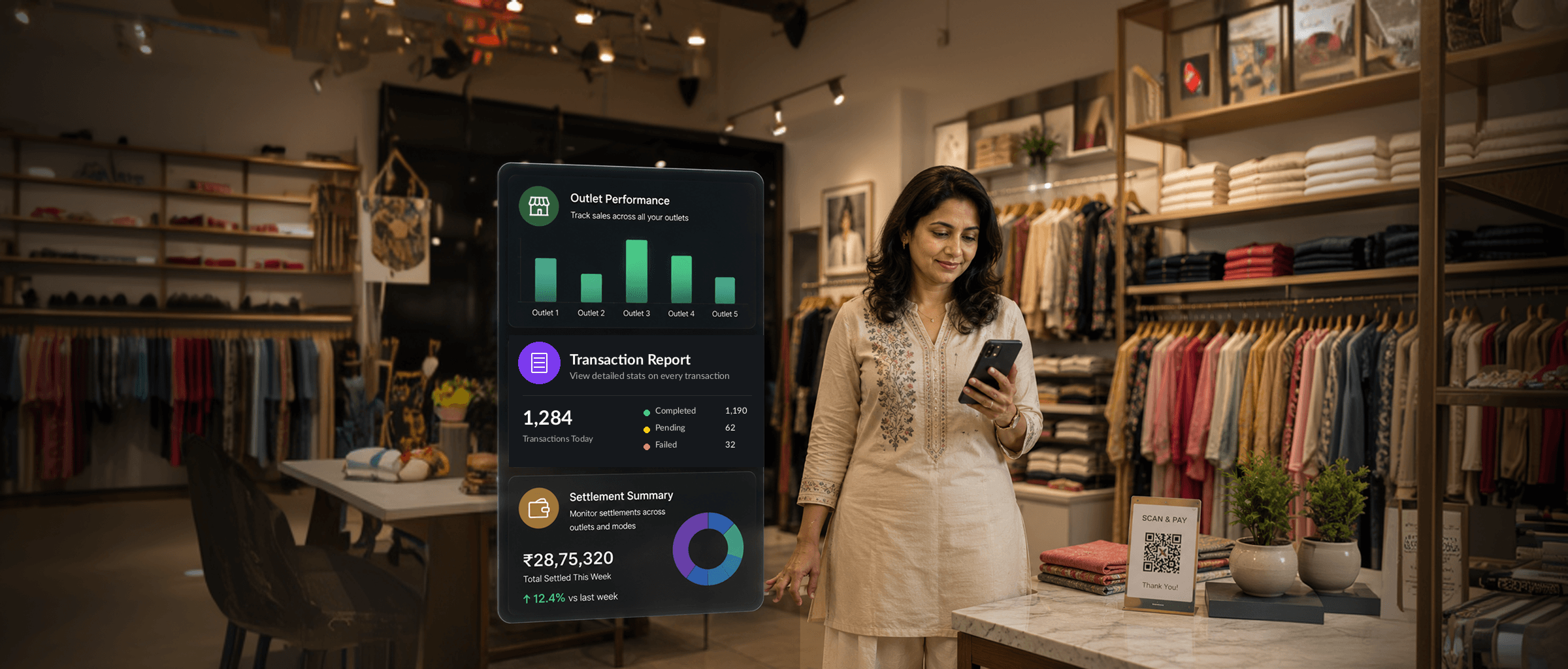
- How much has settled across all outlets this week, broken down by outlet and payment mode?
These are not advanced analytics questions. They are basic business hygiene. Every large retailer answers them daily through a merchant analytics dashboard built into their operations. Every MSME is asking the same questions and getting silence.
“Most merchants don’t just want to see today’s sales. They want to understand how their business is doing over time. Which store is doing better and why? What’s the sales trend over the last six months? These aren’t nice-to-have insights. They’re the kind of answers that help merchants plan better, stock smarter, and grow faster.” - Mintoak
The bank that closes this gap does not just retain a merchant. It becomes part of how that merchant runs their business.
Why App Stickiness Is the Metric That Actually Matters
Most merchant acquiring teams measure activation: merchants onboarded and transacting. Very few measure engagement depth — how often a merchant opens the app for reasons beyond accepting a payment. That metric is what actually predicts retention, LTV, cross-sell conversion, and resistance to switching.
A merchant who opens the bank app only to process payments is interchangeable. The moment a competitor offers lower friction, they switch. A merchant who opens the app every morning to check outlet performance, review payment bifurcation, and track payment mode trends has integrated the bank into how they operate. The merchant relationship has moved beyond payments.
India's payments evolution makes this logic visible. Traditional POS reached 6 million merchants over 30 years. [11] QR codes and merchant apps reached 60 million in under a decade — because the app created a daily engagement layer that hardware never could. [11] PwC projects India will reach 1 billion daily UPI transactions by FY2026–27, with digital payments at 90% of retail flows. [8] At that scale, processing a UPI transaction is table stakes. The differentiator is who helps the merchant understand what those transactions mean.
“Payments are the entry point. The real value lies in what you build on top of them.” - Raman Khanduja, Co-founder & CEO, Mintoak - IBS Intelligence, May 2026
What a Good Merchant Analytics Dashboard Actually Looks Like
Before naming any product, it is worth being precise about what merchants actually need. The bar is not high in technical terms. But it has been almost universally missed.
- Real-time performance. Today's sales, today's settled amount, and a trend line readable at a glance — not last month's PDF.
- Single view across all outlets. Consolidated, with drill-down by store, city, or terminal ID.
- On-demand reporting. Transaction and settlement reports, custom date ranges, instantly downloadable. Reconciliation across QR, POS, UPI, cards, Link Pay, SMS Pay, Scan & Pay, and Tap on Phone.
- Payment mode intelligence. UPI vs card vs cash vs link pay - by week, by outlet, by campaign period.
- All-in-one merchant payments app. Not a separate portal, not a desktop tool. Where the merchant already is.
None of this should require an IT team to interpret. The merchant running a three-outlet restaurant does not have those resources. The tool has to be as intuitive as reading a WhatsApp message.
Mintoak Business360: One Merchant. Many Locations. One Powerful View
Mintoak Business360 is a white-label analytics module that enables merchant acquirers to embed business intelligence directly within their merchant app. The bank stays at the centre of the merchant relationship. Mintoak powers the intelligence layer behind the scenes.
For the merchant, the experience is unchanged. Same app. Same login. Same bank. What changes is what the app now tells them daily payments across all outlets, payment mode breakdown, performance trends. Answers to questions they have always had but never been able to ask. For the bank, the shift is structural. Every daily login is a retention mechanism, a cross-sell trigger, and a behavioural data point. Business360, embedded within the bank's digital merchant journey, creates lasting value beyond transaction processing.
Learn more at mintoak.com/products/mintoak-business360.
Key Capabilities
Interactive Business Dashboard
Real-time view of successful transactions, settled amounts, and performance trends. Sales versus transactions plotted across the day. Payment mode breakdown on a single scroll. Built for daily business monitoring, not occasional reporting.
Multi-Location Sales Insights
Consolidated performance across outlets, brands, cities, and MIDs from one screen. Drill-down by outlet, city, brand, or terminal. Business owners can monitor performance across every location from a single dashboard.
Custom Transaction & Settlement Reports On-the-Go
Monthly and custom date-range reports, downloadable instantly. Reconciliation across QR and POS is seamless, no phone calls, no month-end wait, no parallel accountant spreadsheet.
A white-label analytics solution built to integrate seamlessly with existing banking infrastructure. API-first architecture enables rapid deployment, helping banks deliver merchant insights without disrupting their core systems and workflows.
What Business360 Does for the Bank
Business360 is what turns payment data into decisions. For the acquiring bank, it delivers three direct outcomes: increased merchant loyalty, app stickiness, and in-depth insight into merchant portfolios that makes cross-sell precise, contextual, and timely.
The Engagement Effect
When merchants use Business360 to track performance, compare outlets, and download reports, the bank's app stops being a utility and becomes part of their daily workflow. Mintoak's platform data shows a 90% year-on-year increase in merchants accessing the app specifically to download reports. GPV grew 320% within one year of merchant onboarding. Merchant onboarding via the app increased 5x for a private acquirer in India after deployment. [11] A merchant whose GMV crosses a threshold gets a pre-approved loan offer; a merchant whose seasonal peak is approaching gets a business insurance prompt; a merchant with rising evening volumes becomes a credit card candidate. Intelligence-triggered, contextually timed, no RM required.
- 55% of active merchants who logged into the app explored the loans section in a month
- 40% of loans disbursed in the last six months were unassisted, no RM involvement
- 48% higher average disbursal value for unassisted versus RM-assisted loans [11]
Merchants who regularly engage with business insights are more likely to explore additional financial products and services relevant to their growth. Business360 is more than a reporting tool. It gives merchants a reason to return to the merchant payments app every day, strengthening engagement and creating opportunities for deeper relationships.
For banks and acquirers, this engagement translates into richer merchant intelligence and more relevant cross-sell opportunities. By helping merchants understand sales trends, customer behaviour, and business performance, Business360 creates the context banks need for timely and personalised product recommendations.
These insights can be seamlessly extended through Mintoak's SellSmart module, which enables banks to surface pre-approved loans, credit cards, and other financial products within the merchant journey. Together, Business360 and SellSmart help transform merchant engagement into a scalable growth and monetisation engine.
From Payment Partner to Business Partner
India's merchant payments story is now three phases long. Infrastructure: building the rails, digitising acceptance. Adoption: QR codes, Soundboxes, 60 million merchants in under a decade. The third phase - the one that determines which banks grow and which plateau is monetisation.
True merchant engagement goes beyond payments. It is reflected in how frequently merchants use the merchant payments app to track collections, reconcile settlements, monitor outlet performance, and access credit products.
As more business workflows move onto the platform, the bank becomes increasingly embedded in the merchant's day-to-day operations, driving higher retention and reducing the likelihood of switching to different apps for different needs.
Business360 is built to enable exactly this. It integrates directly into the bank's existing merchant app — merchants continue to operate within the bank's interface, the experience is unchanged, and Mintoak provides the underlying technology platform.
Built on API-first, cloud-native architecture, Business360 deploys alongside existing banking infrastructure in as little as twelve weeks, without disrupting core systems or workflows. Mintoak's platform is live with HDFC Bank SmartHub Vyapar, YES BANK, Axis Bank, SBI Payments, and Karnataka Bank, with 4.9 million merchants onboarded. [11]
The banks that grow their SME merchant portfolios will not do it by processing more transactions. They will do it by becoming the platform merchants use to understand their own business.
Data tells a story. But only if your merchants can read it.
Frequently Asked Questions
1. How does Business360 differ from a standard merchant reporting portal?
A standard merchant reporting portal shows settlement confirmations and basic transaction logs - backward-looking, static, and typically accessed once a month. Business360 is built for daily use. It surfaces real-time performance trends, compares outlet activity across locations, and allows merchants to generate custom reports on demand - all within the bank's existing payments app. The difference is not just features. It is frequency of use, and what that frequency means for the bank's relationship with the merchant.
2. How does Mintoak Business360 integrate into a bank's existing merchant app?
Business360 integrates directly into the bank's existing merchant app via API - no ground-up build required. Merchants continue to use the bank's own interface; the experience is unchanged. Mintoak provides the underlying analytics engine, white-labelled under the bank's brand. The platform is built on API-first, cloud-native architecture, enabling banks to go live in as little as twelve weeks without disrupting core systems or workflows.
3. How does a merchant analytics dashboard help SME merchants?
A merchant analytics dashboard gives merchants a clear view of how their business is performing - replacing fragmented terminal reports and month-end statements with real-time, on-demand insight. Whether it is a single-counter kirana or a pharmacy chain with multiple outlets, it answers the questions that drive daily decisions: which location is underperforming, what payment modes customers prefer and more. Without it, merchants rely on instinct. With Business360, they stock smarter, staff smarter, and act faster.
4. What is the difference between merchant activation and merchant engagement?
Merchant activation is binary - onboarded and transacting. Merchant engagement measures how often a merchant uses the bank's app for reasons beyond accepting payments. Engagement depth predicts everything activation doesn't: retention, cross-sell conversion, lifetime value, and resistance to switching to other apps in the market. A merchant who checks outlet performance, downloads settlement reports, and tracks payment trends daily has integrated the bank into their operations. That relationship doesn't switch for a marginally better device.
5. What reporting and analytics capabilities does Mintoak Business360 provide to SME merchants?
Business360 gives merchants four capabilities through their bank's existing app: an interactive dashboard showing real-time transactions, settled amounts, and performance trends; multi-location sales insights with drill-down by outlet, city, brand, or MID; custom transaction and settlement reports downloadable on demand; and customer behaviour analysis and payment mode split. All of this is accessible without a separate portal, without an IT team, and without waiting for month-end statements.
Discover how Mintoak Business360 can help your bank retain, engage, and monetise its SME merchant base. Partner with us → mintoak.com/contact-us
References
[1] NPCI / PIB - UPI 10-year anniversary report (April 2026): 241.62B transactions FY2025–26, 703 banks on UPI, 84.8% retail digital payment share - npci.org.in
[2] PIB / Union Cabinet - UPI P2M Incentive Scheme 2024–25: zero MDR on UPI P2M - pib.gov.in
[3] Economic Survey 2025–26, PIB: MSMEs - 31.1% of GDP, 48.58% of exports, 35.4% of manufacturing - pib.gov.in
[4] Udyam Registration Portal / Ministry of MSME - Feb 2026: 7.86 crore MSMEs, 34.63 crore employed - udyamregistration.gov.in
[5] Open Engineering / Pandey, Kumar, Gupta (2024): 5% of Indian SMEs have fully utilised digitisation technologies - doi.org/10.1515/eng-2024-0072
[6] OECD SME Digitalisation Report, 2024: SME–large enterprise digital gap widened since 2020 - oecd.org
[7] NASSCOM, 2024: 65% of Indian SMEs plan to increase digital tool spending in next 18 months - nasscom.in
[8] PwC India Payments Outlook: 1B daily UPI transactions by FY2026–27, 90% digital retail share - pwc.in
[9] Bloomberg Opinion - Andy Mukherjee (March 2022): 4 platforms per SME stat; Khanduja quote - bloomberg.com
[10] IBS Intelligence - Raman Khanduja interview (May 2026): ‘payments are the entry point’ - ibsintelligence.com
[11] Mintoak - Proposition Deck Mar 2025, Business360 product page (mintoak.com/products/mintoak-business360), LinkedIn communications. Source for all platform performance data, product features, and brand claims.
Share on your socials
Copy Link
Checkout other blogs