Generated by AI
Why NBFCs Are Winning Merchant Credit That Banks Already Own
8 mins
●
ByMintoak
●
30 Jun 2026

Copy Link


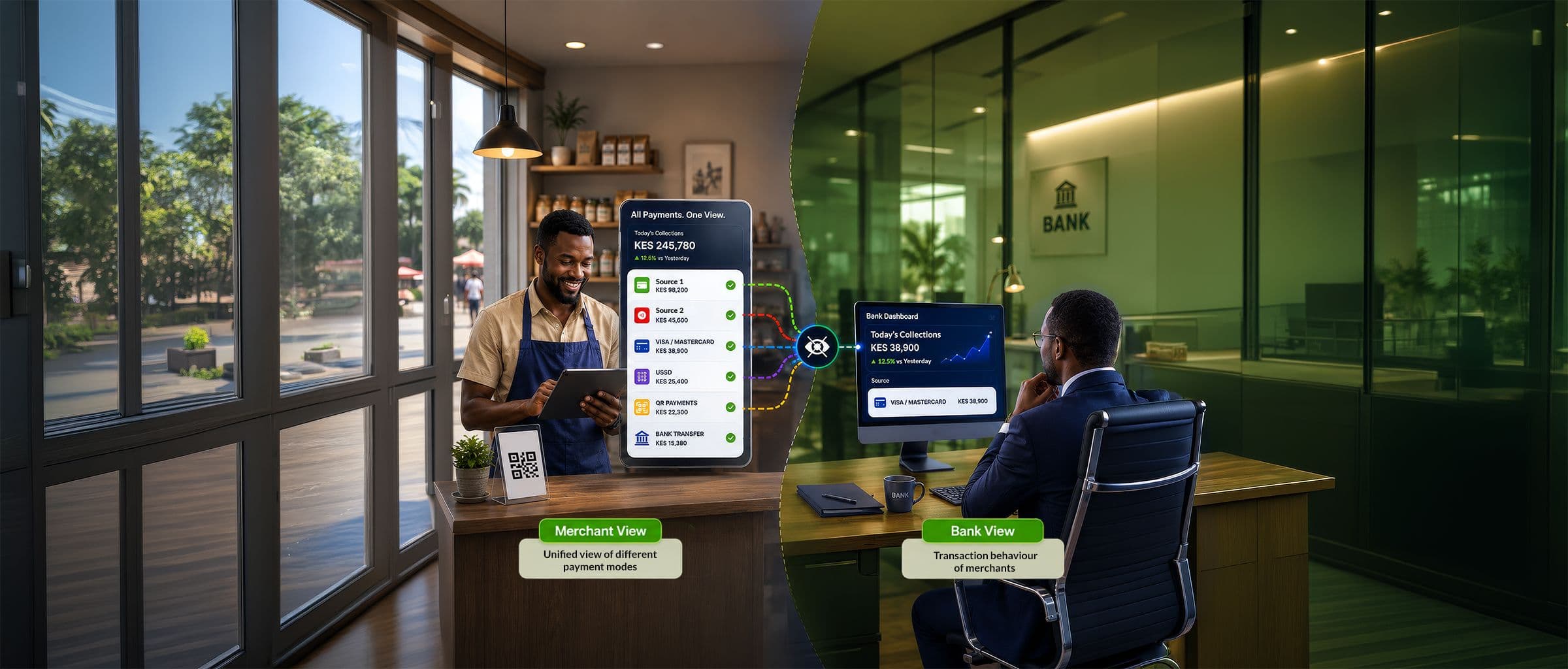
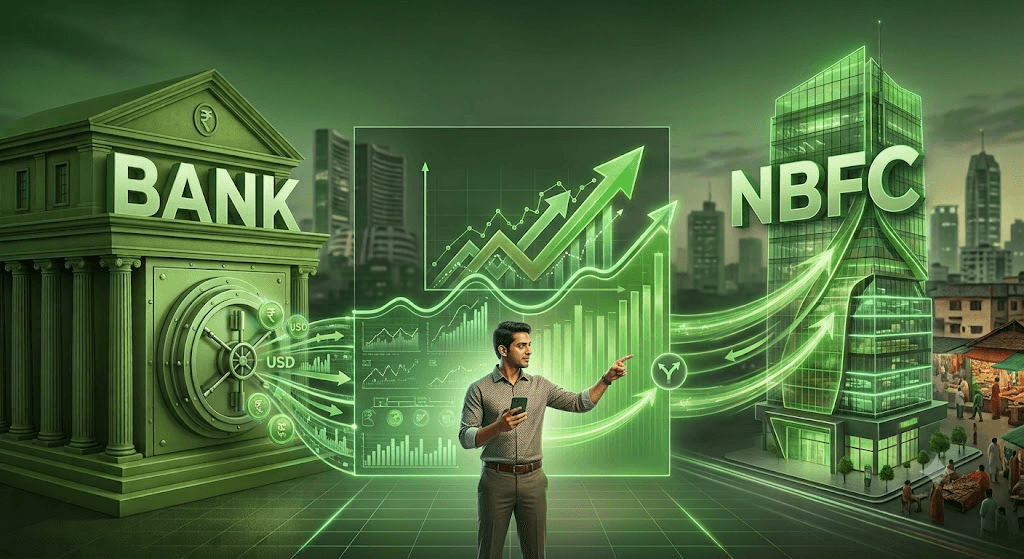
NBFCs and fintechs are originating merchant credit from portfolios that acquiring banks process payments for every single day. The bank processes the payments. The NBFC owns the credit relationship. Acquiring banks in India are sitting on one of the most underleveraged credit assets in the financial system. Every merchant in their portfolio generates a continuously updated, first-party financial profile - as a by-product of daily payments processing, at zero incremental data acquisition cost.
The strategic implication is direct. Banks that process a merchant’s payments already know more about that business’s credit capacity than any NBFC or fintech lender can determine from external data. The underwriting has, in effect, already been done. What most acquiring banks lack is not data - it is the decisioning architecture to convert that data into a structured credit origination channel.
Over 7.83 crore enterprises are registered on India's Udyam portal as of February 2026. [1] The MSME credit gap stands at an estimated USD 130–170 billion.[2] These are not market development numbers — they are the size of the lending opportunity sitting inside acquiring portfolios that have already cleared KYC. "To cross-sell services, you need data. And nothing generates nuanced data like payments."
"To cross-sell services, you need data. And nothing generates nuanced data like payments."
- Raman Khanduja, CEO, Mintoak (The CapTable, August 2025) [9]
Banks that have deployed a structured merchant engagement layer have seen 55% of active merchants engage with cross-sell products and a 4.5x lift in app-driven cross-sell. [10] The question for bank leadership is not whether the opportunity exists. It is whether the institution has the architecture to capture it before NBFCs and fintechs do.
Why Payments Data Outperforms Credit Scores on Merchant Credit
The case for payments-led merchant credit underwriting is not a data science argument. It is a precision argument.
GST filings are quarterly. ITR data is annual. Bureau scores reflect historical debt behaviour — not current revenue trajectory. None of these instruments captures what an acquiring bank sees in real time: payment volume trends, ticket size distribution, seasonal revenue patterns, and day-level consistency of business activity. These signals are more current, more granular, and more predictive of SME repayment behaviour than lagging bureau indicators - particularly across Tier 2 and Tier 3 merchant cohorts where bureau penetration is structurally thin.
The volume of intelligence being generated is substantial. UPI processed 23.2 billion transactions worth ₹29.9 trillion in May 2026 alone, with P2M payments constituting 63% of total UPI transaction volume. [5][6] Every acquiring bank's portfolio is accumulating this intelligence continuously. The question is not whether the data exists — it is whether the institution has the architecture to price and originate against it.
The Net Interest Margin (NIM) contribution from converting even a fraction of this intelligence into performing merchant loan assets is material. Banks that have deployed structured merchant engagement layers have seen 55% of active merchants engage with cross-sell products and a 4.5x lift in app-driven cross-sell. [10] These are conversion metrics from live deployments - not modelled projections.
Portfolio Segmentation as the Foundation of Merchant Credit Strategy
Before any merchant credit programme can move, two functions need to be aligned.
The Chief Risk Officer owns the credit decision - what the bank is willing to lend, to whom, at what risk. The Chief Digital Officer or CTO owns how that decision reaches the merchant - the platform, the app experience, the API integrations. One without the other produces either a credit policy with no delivery channel or a digital product with no underwriting discipline.
Segmentation is where these two functions meet.
Not all merchants in an acquiring portfolio carry the same credit profile. A QR-code merchant in Tier 3 Rajasthan processing ₹2 lakh a month is a different credit proposition from a POS-enabled electronics retailer in Mumbai processing ₹40 lakh. Treating them with the same loan offer underserves the best merchants and overexposes the bank on the weakest ones.
Effective segmentation groups merchants across four dimensions - payments volume, industry type and seasonality, device mix, and payment consistency over rolling 90 days. Each group gets a differentiated credit offer: different loan amounts, different tenors, different pricing.
The underwriting variables are already inside the acquiring system. Monthly payments value, how consistently the merchant transacts, average ticket size, and month-on-month volume growth - these signals are more current and more predictive than a quarterly GST filing or an annual bureau check. And unlike a static credit review, this model updates itself. A merchant who crosses a volume threshold in month three moves into a higher credit tier automatically. A textile merchant whose GMV spikes every October gets a pre-Diwali working capital offer timed to their revenue cycle, not to a banker's review calendar.
The result is a credit book that reflects how merchants actually perform, not how they looked on paper at a point in time.
The Credit Architecture: From Payments Signal to Performing Asset
A payments-led merchant credit programme requires four integrated components: a data ingestion and analytics layer drawing from existing acquiring infrastructure, an eligibility determination engine with API integration into core lending systems, a merchant-facing offer module embedded within the payments app, and a straight-through digital fulfilment workflow.
Three design principles determine whether this architecture produces a performing credit book or a high-friction product that merchants do not adopt:
Passive offer origination. Credit eligibility is determined by the platform, not by the merchant. The offer shows contextually within the payments app - immediately following a high-GMV payments cycle - removing the friction of merchant-initiated applications and removing the complexity and selection bias in self-declared credit demand.
Straight-through fulfillment. Upon acceptance, the complete credit cycle - term confirmation, documentation, sanction, and disbursement directly into the merchant’s payments account - executes within the app. No branch visit, no documentation chain, no manual queue.
Payments-linked repayment sweep. A pre-agreed percentage of daily or weekly payments volume sweeps toward loan repayment automatically. This eliminates EMI delinquency risk, aligns repayment timing with the merchant’s cash flow cycle, and reduces NPA risk on the merchant book without requiring a collections infrastructure.
Compliance architecture is a design prerequisite, not a deployment consideration. The RBI's Digital Lending Directions, 2025 — governing RE-LSP (Regulated Entity - Lending Service Provider) arrangements, FLDG (First Loss Default Guarantee) structuring, data localisation, and borrower consent management — must be embedded at the platform design stage. [8] Retrofitting compliance post-launch is not viable under the current regulatory framework.
For the broader merchant cross-sell architecture within which this programme sits, see: From Transaction to Engagement: Building a Merchant Cross-Sell Engine for Merchant Acquirers
Merchant Credit Underwriting: Why Acquiring Banks Hold the Structural Edge
The merchant lending market in India is highly competitive. NBFCs have deployed significant capital into SME credit. Fintech lenders have built sophisticated alternative underwriting models. The acquiring bank's advantage, along with speed to market, is a structural data asymmetry that no external lender can close. NBFCs and fintech lenders access payments intelligence indirectly, through account aggregator consent flows, GSTN API integrations, or bank statement analysis. Each data pipe introduces latency, consent friction, and incomplete data - three handicaps the acquiring bank does not have. The acquiring bank's payments data is first-party, real-time, and generated within its own infrastructure. That asymmetry does not narrow over time, it widens as payment history accumulates.
KYC, account verification, and business authentication are sunk costs absorbed at merchant onboarding. For every NBFC competing for the same merchant credit opportunity, these are variable costs incurred on each origination. The trust premium embedded in the daily payments relationship - reliable processing, real-time settlement, dispute resolution - constitutes relationship capital that external lenders must replicate through marketing expenditure. It cannot be purchased at scale.
PSU banks have recognised the strategic logic. SBI, Punjab National Bank, and Central Bank of India are actively scaling QR-code-led merchant acquisition with the Finance Ministry setting a ₹17.31 trillion MSME lending target for PSBs in FY26. [4] The acquiring infrastructure being built for payments today is the credit origination channel for merchant lending tomorrow.
"Banks are focusing on making their payment platforms more relevant through features like instant onboarding and on-demand settlement. With an existing strong banking relationship, once the payment layer is solid, adding credit and related products becomes much easier."
Platform Economics: The Build vs. White-Label Decision
The infrastructure required to operationalise a payments-led merchant lending programme - transaction analytics, real-time credit scoring, campaign orchestration, digital fulfilment, and regulatory compliance architecture - represents a significant build commitment if developed in-house.
Production-grade merchant credit platforms built internally typically require 18 to 36 months of development and material resource allocation across machine learning, API engineering, compliance technology, and merchant experience design. For most acquiring banks, this timeline is commercially untenable. NBFCs and fintechs are originating from the same merchant portfolios today - not in 36 months.
White-label platforms purpose-built for bank acquirers compress deployment to 3-4 months, with the bank's brand identity, credit policy parameters, and merchant data architecture fully preserved. The acquiring bank retains full ownership of the merchant relationship and the credit book. The platform provides the operational layer - without the build commitment, extra engineering resources, or post-launch compliance fixes.
The cost-to-income argument is equally direct. A ground-based merchant credit sales force scales linearly - agent remuneration, travel costs, manual processing overhead, rejection rate drag. A digital cross-sell platform converts the existing merchant payments app into a zero marginal-cost credit origination channel. Cost per originated account falls as the portfolio scales. The inversion of the economics is the strategic case.
Mintoak's SellSmart operationalises this model: eligibility determination APIs integrated into the bank's existing payments infrastructure, pre-approved offers surfaced to qualified merchant cohorts, dynamic segmentation campaigns executed without manual intervention and for the merchant, no branch visit, no paperwork, no friction.
Not every merchant credit journey fits the pre-approved, pre-qualified model. Mintoak SellSmart also supports a general loan offer surfaced within the app that a merchant can tap and apply for directly - capturing basic information before a bank follow-up call completes the process. This is not a pre-approved offer; however, it removes the friction of discovery and first contact even where full pre-qualification from payments history isn't yet possible, such as for newer merchants still building a transaction record. The retention arithmetic reinforces the investment case. As examined in The Merchant Retention Blueprint, merchants holding credit products with their acquiring bank exhibit materially stronger portfolio retention than payments-only merchants. A pre-approved loan is not merely a credit asset - it is a structural switching cost embedded in the merchant relationship.
Reframing the Merchant Acquiring Book
The strategic reframe is this: a merchant acquiring portfolio is not a payments infrastructure asset. It is a pre-underwritten, continuously monitored, relationship-anchored credit origination channel - one that generates the underwriting intelligence required for merchant lending as a structural by-product of its core payments function.
Banks that deploy payments-led credit programmes gain a competitive edge. Each month of payments history deepens the underwriting advantage. Each credit product placed increases switching cost. Each successful repayment - swept automatically from payments volume - adds a performance data point that improves the next credit decision. The system becomes more accurate, more efficient, and more defensible over time.
The MSME credit gap will be closed. The only question is who closes it - the acquiring bank, who already holds the data advantage, or the NBFCs and fintechs who are moving faster without it. The architecture decisions made in the next two quarters - on data infrastructure, eligibility APIs, credit scoring, and merchant app integration - will determine which institutions capture this opportunity and which loses it to competitors who do not own the payments relationship but are moving faster to monetise it. The data is already in the portfolio. The only variable is organisational will.
Mintoak’s SellSmart gives acquiring banks a production-ready path to operationalise this model - without the 18-month build cycle, without field sales overhead, and without losing the merchant credit opportunity to lenders who do not own the payments relationship.
Talk to us at Mintoak.com.
Frequently Asked Questions
Q1. What is a pre-approved merchant loan platform for bank acquirers?
A pre-approved merchant loan platform derives credit eligibility directly from merchant payments behaviour and shows loan offers within the merchant payments app - without requiring merchant-initiated application. Disbursement flows into the payments account; repayment sweeps from future payments volume. The result is a fully digital, straight-through credit cycle contained entirely within the existing acquiring relationship - at near-zero marginal origination cost once deployed.
Q2. How does payments data improve merchant credit underwriting?
Payments-derived signals - monthly volume, payment day consistency, ticket size distribution, GMV growth trajectory - constitute a real-time Merchant Financial Health Score more predictive of SME repayment behaviour than lagging bureau indicators, particularly for Tier 2 and Tier 3 merchants with limited formal credit histories. Acquiring banks generate this data as a by-product of their core payments function, with no incremental data acquisition cost and a recency advantage that no external credit bureau can match.
Q3. Why do acquiring banks hold a structural advantage over NBFCs in merchant lending?
Acquiring banks hold first-party, real-time payments intelligence - eliminating the data latency and consent friction incurred by external lenders through Account Aggregator frameworks. KYC and business verification are sunk costs at onboarding, not variable costs per origination. Repayment automates through payments-linked sweeps, removing the collections infrastructure requirement. The daily payments relationship provides a trust premium and switching cost that no NBFC or fintech can replicate at comparable cost.
Q4. What is the deployment timeline for a white-label merchant credit platform?
White-label platforms purpose-built for bank acquirers deploy in 3-4 months- versus 18 to 36 months for an in-house build. Brand identity, credit policies, and merchant data architecture are fully preserved. Eligibility APIs integrate into the existing payments app; campaign management, offer presentation, and fulfilment are handled by the platform - with no ground sales team required for origination at portfolio scale.
Q5. How should banks measure ROI on a digital merchant lending programme?
The appropriate framework tracks: credit origination cost per account versus field-based acquisition, NPA rate on payments-underwritten merchant credit versus bureau-underwritten SME credit, merchant retention differential between credit product holders and payments-only merchants, and incremental NIM contribution per merchant per annum. Mintoak deployment data shows 55% of active merchants engage with cross-sell products when offers are embedded in the payments app - with a 4.5x lift in app-driven conversion. [10]
References
[1] PIB / Ministry of MSME - 7.83 crore Udyam registrations as of February 28, 2026. https://www.pib.gov.in/PressReleasePage.aspx?PRID=2246892
[2] Press Information Bureau, Government of India - AI-driven credit models have the potential to unlock an estimated credit gap of USD 130–170 billion in economic value, May 13, 2026. https://www.pib.gov.in/PressReleasePage.aspx?PRID=2260497
[3] SIDBI MSME Pulse Special Edition, June 2025 - MSME credit portfolio ₹35.2 lakh crore; ₹30 lakh crore addressable credit gap. https://www.sidbi.in/msme-pulse
[4] Business Standard / Finance Ministry - ₹17.31 trillion PSB MSME lending target FY26. https://www.business-standard.com/finance/news/finmin-sets-rs-17-31-trillion-msme-lending-target-for-psbs-in-fy26-125041701152_1.html
[5] NPCI / ANI - UPI hits record 23.2 billion transactions, ₹29.9 trillion, May 2026. https://www.aninews.in/news/business/upi-hits-new-high-in-may-2026-with-232-billion-transactions-worth-rs-299-trillion-npci-data-shows20260602155337/
[6] PIB / NPCI - P2M = 63% of UPI volume; FY2026 total 24,162 crore transactions. https://www.pib.gov.in/PressReleasePage.aspx?PRID=2257087
[7] The Economic Times, January 22, 2026 - PSU banks counting on QR-based payments to breach a fintech fort. Raman Khanduja, CEO Mintoak, quoted. https://economictimes.indiatimes.com/tech/technology/psu-banks-counting-on-qr-based-payments-to-breach-a-fintech-fort/articleshow/127036324.cms
[8] Reserve Bank of India - Digital Lending Directions, 2025, RBI/2025-26/36, May 8, 2025. https://www.rbi.org.in/
[9] The CapTable, August 2025 - IRCTC boards the fintech express. Raman Khanduja, CEO Mintoak, quoted. https://the-captable.com/2025/08/beyond-railway-irctc-payment-licence-fintech-ecommerce-play/
[10] Mintoak Engage360 - Merchant Lifecycle Management Platform, Impact Data. https://www.mintoak.com/products/mintoak-engage360
Additional: NPCI UPI Product Statistics · GSTN · Sahamati Account Aggregator · IBEF MSME
Share on your socials
Copy Link
Checkout other blogs